In short
Do solar CCTV cameras work in Singapore's rain and shade? How solar security cameras work, where they make sense, what to check before buying, and when to go wired.
Solar CCTV cameras can work in Singapore, but only where there is no power point nearby and the panel gets open sky for most of the day: a construction site, a farm, a far gate on a landed property or a temporary car park. With rain on about 171 days a year and the least sunshine in November and December, a solar camera needs a big enough battery to ride through grey weeks. Where you can run a cable, a wired camera is cheaper over time and far more reliable.
Key Takeaways
- A solar CCTV camera is a battery camera with a solar panel that tops the battery up; it still needs a mobile (4G) or Wi-Fi signal to send video.
- Singapore averages 2,113mm of rain a year over 1991 to 2020, and 2025 had 2,984.9mm, 18% above the long-term average, so plan for long cloudy spells.
- Shade from trees, roofs and neighbouring blocks cuts solar charging far more than cloud does; place the panel first, then the camera.
- Battery cameras usually record events, not 24 hours, to save power.
- For homes and offices with power nearby, a wired camera is the better choice.
How does a solar CCTV camera work?
A solar CCTV camera is a security camera that runs from a rechargeable battery, with a solar panel that charges the battery in daylight. It sends video over Wi-Fi or, where there is no Wi-Fi, a 4G SIM card, and records to a microSD card in the camera or to the maker’s cloud. Some are one unit with the panel built in; others have a separate panel on a cable, so the camera can sit in the shade while the panel faces the sky.
To save the battery, most of these cameras sleep until their motion sensor (often a PIR heat sensor) wakes them, then record a clip. That is different from a mains-powered CCTV system, which can record around the clock.
TP-Link’s Tapo C425 is one example: a 2K outdoor battery camera with a 10,000mAh battery, rated IP66, that works with TP-Link’s Tapo A200 solar panel. TP-Link quotes up to 300 days per charge from a lab test; a camera that records many events a day will drain far sooner. Our Tapo camera guide compares the range.
Do solar cameras work in Singapore weather?
They can, with planning. The Meteorological Service Singapore says it rains on an average of 171 days a year, and the long-term mean annual rainfall at Changi is 2,113.3mm (1991 to 2020). February and March have the most sunshine, while November and December, during the northeast monsoon, have the least. Some years are wetter still: NEA reported 2,984.9mm in 2025, 18% above the long-term average, including the wettest March on record.
What this means for a solar camera:
- Size the battery for bad weeks, not good days. Ask how many days the camera runs on a full battery with no sun at all.
- Expect slower charging in November and December. Check the battery level in the app every week during the monsoon.
- Heat matters as much as rain. Check the operating temperature on the specification sheet; a panel or camera in full afternoon sun runs hot.
- Keep the panel clean. Dust, bird droppings and leaves cut charging; a slight tilt helps rain rinse the panel.
Where does a solar CCTV camera make sense?
| Site | Solar camera? | Why |
|---|---|---|
| Construction site, before power is connected | Good fit | Temporary, no power, often 4G only |
| Farm, nursery or fish farm | Good fit | Long distances, open sky |
| Far gate or fence on a landed property | Possible | Avoids trenching a cable; check shade from trees |
| Temporary car park or event site | Possible | Moves when the site moves |
| HDB flat or corridor | No | Little sun; corridor cameras need the Town Council’s advice first |
| Office, shop or main door of a house | No | Power is nearby; wired is more reliable and records all day |
For HDB flats, see our HDB doorbell camera rules. For landed homes, our guide on installing CCTV outside a landed property covers where cameras may point.
What to check before buying a solar security camera
- Battery capacity and days without sun, not just the panel’s wattage.
- Weather rating: look for IP65 or IP66 for exposed outdoor use.
- Connection: Wi-Fi reach at the spot, or a 4G model and a SIM data plan, which is a monthly cost.
- Recording: event clips or continuous, microSD size, and whether cloud storage needs a subscription.
- Detection: person and vehicle detection cuts the false alerts that drain the battery; our article on motion vs AI detection explains why.
- Theft: a camera on a pole in an empty site is easy to take, and its memory card goes with it. Mount it high and use cloud backup where you can.
Solar camera or wired CCTV?
| Feature | Solar battery camera | Wired CCTV with a recorder |
|---|---|---|
| Power | Battery and solar panel | Mains power, or through the network cable (PoE) on many IP systems |
| Recording | Mostly event clips, on a card or cloud | 24 hours, on the recorder’s hard disk |
| Weather risk | Long rainy spells can run the battery down | Not affected |
| Running cost | 4G data plan or cloud subscription, if used | Electricity only |
| Best for | Sites without power | Homes, shops, offices |
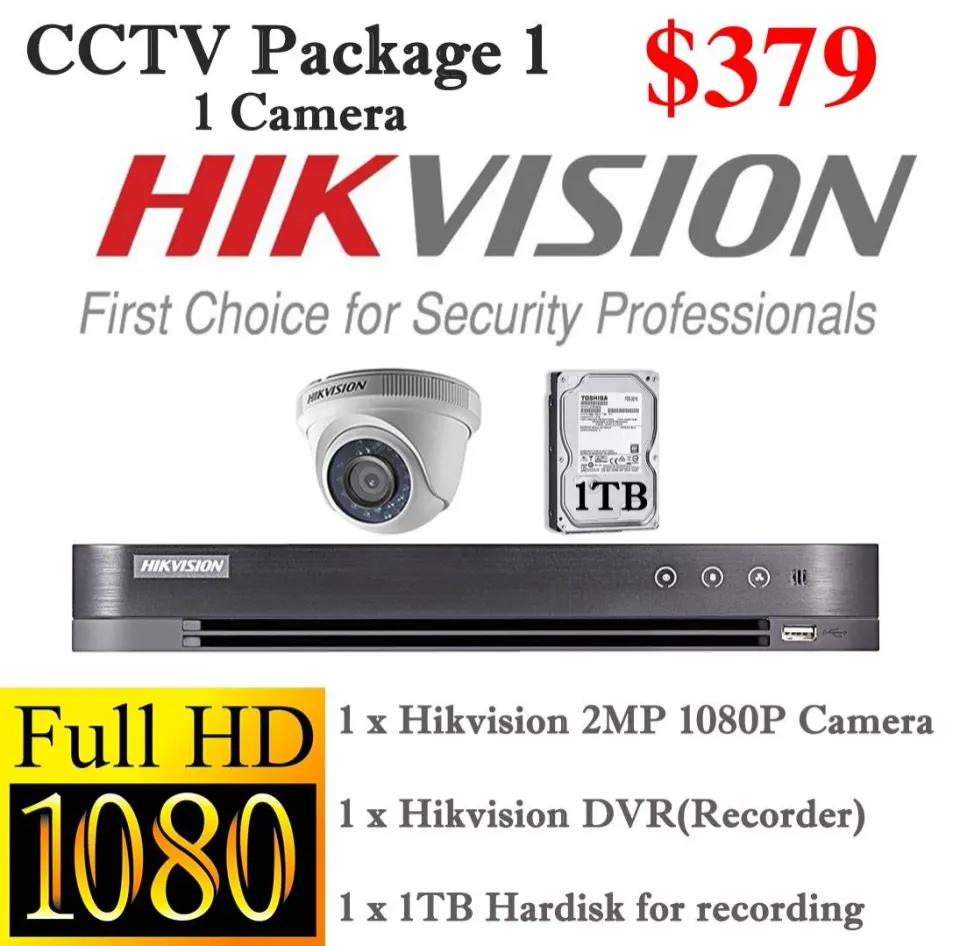
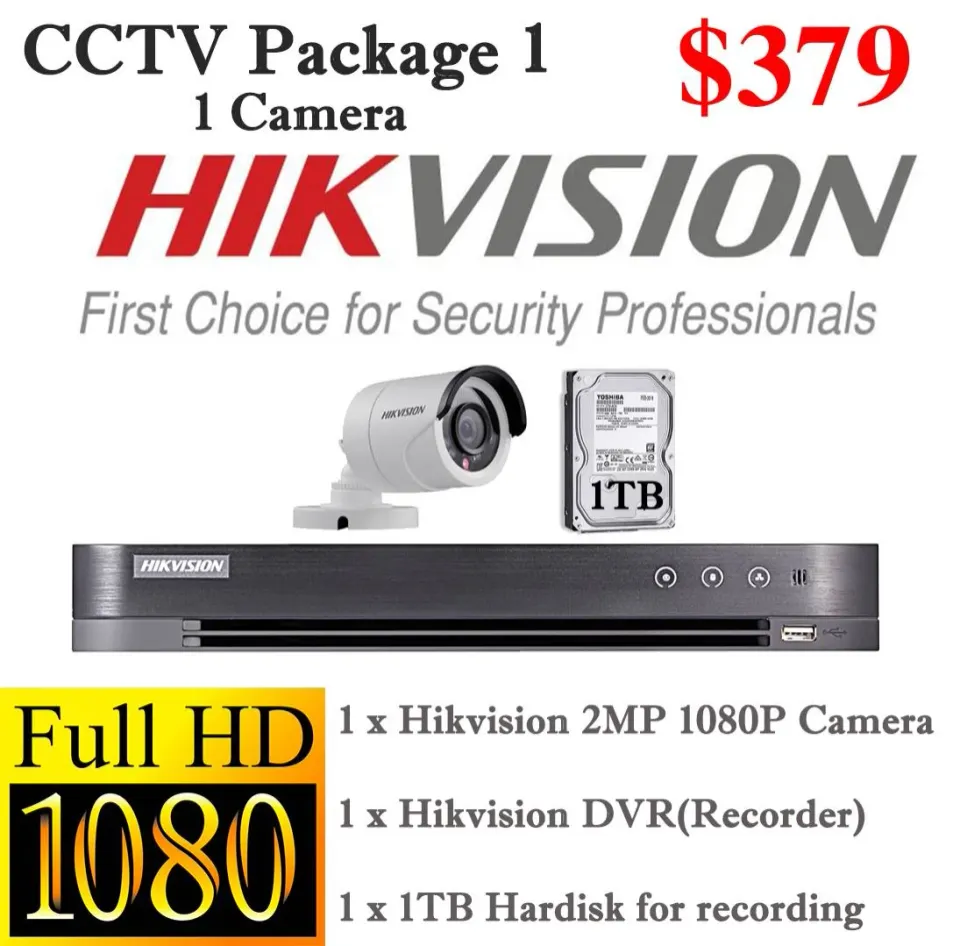
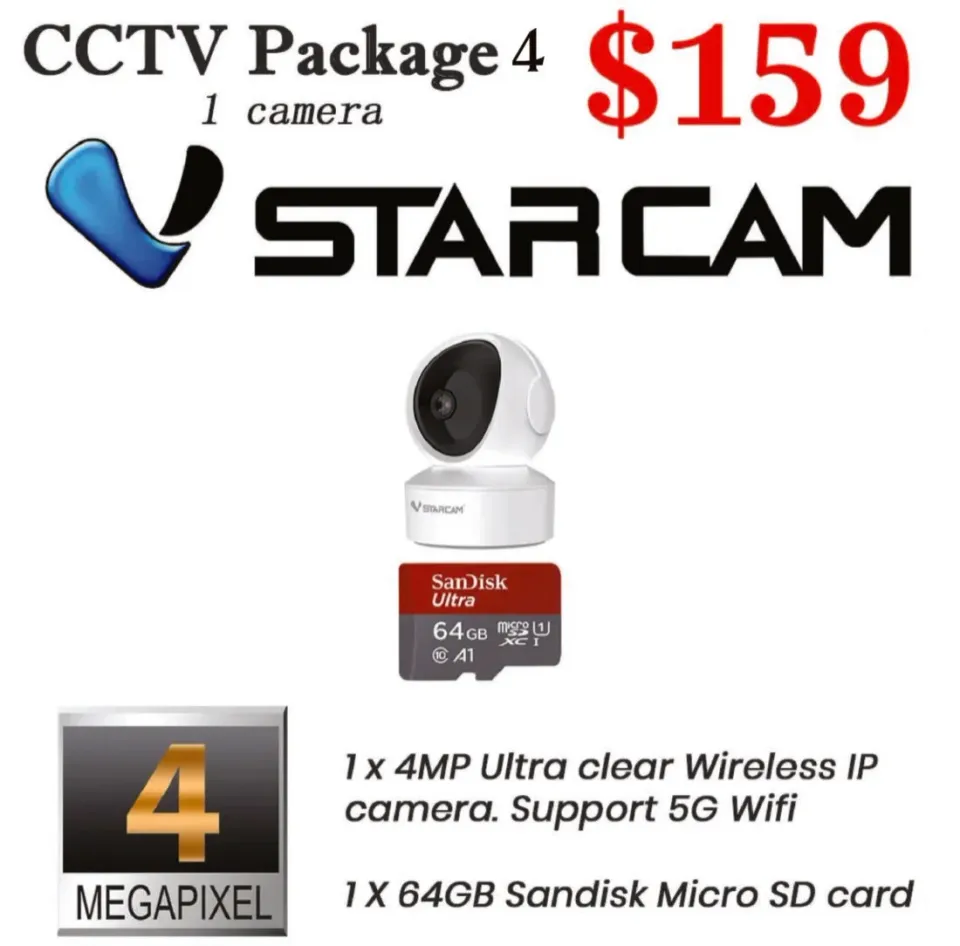
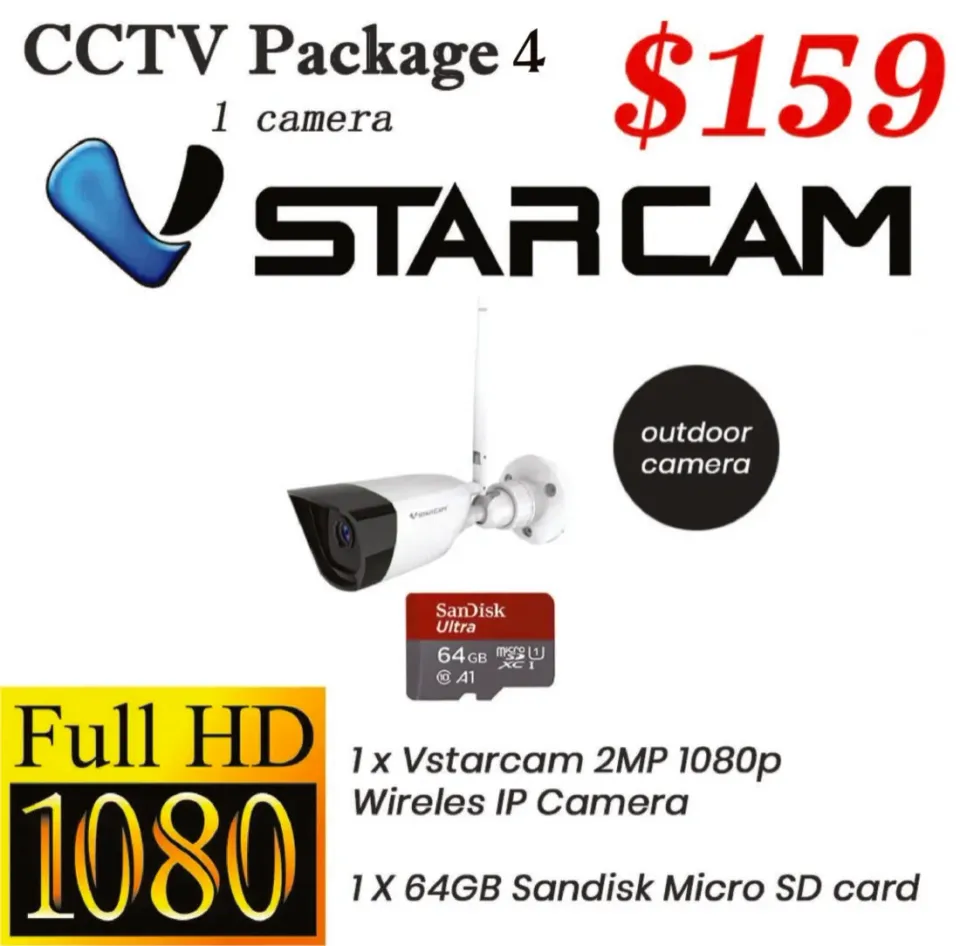
If power is within reach, wired is the better buy. Our Package 2 is a Hikvision IP system with an NVR recorder and a 1TB hard disk, with one network cable per camera, from S$479 for one camera. Package 1, a Hikvision 1080P system with a DVR, starts at S$379. If you only need one extra spot with a power point but no cable route, our Package 4 Vstarcam wireless camera starts at S$159; it still needs that power point.
Ask us about a site without power
CCTVSG.NET has installed CCTV across Singapore since 2011. Send us photos of the spot, where the nearest power point is and whether there is Wi-Fi, and we will tell you whether a cable run, a wireless camera or a solar setup makes sense. Request a quote or contact us.
Sources
- Meteorological Service Singapore, Climate of Singapore: https://www.weather.gov.sg/climate-climate-of-singapore/
- NEA, “Singapore records wettest ever March and hottest ever June and November in 2025” (23 March 2026): https://www.nea.gov.sg/media/news/news/index/spore-records-wettest-ever-march-and-hottest-ever-june-and-november-in-2025
- TP-Link Tapo Singapore, Tapo C425: https://www.tapo.com/sg/product/smart-camera/tapo-c425/
Frequently asked questions
- Do solar CCTV cameras work at night?
- Yes. The battery powers the camera at night and the panel recharges it in daylight. Most use infrared or a spotlight for night video. The question is whether the battery lasts through several cloudy days, which matters in Singapore's monsoon months.
- Does a solar CCTV camera need Wi-Fi?
- It needs a connection to send video and alerts: Wi-Fi if the spot is in range, or a 4G SIM card with a data plan. Most can still record to a microSD card without a connection, depending on the model.
- Can I install a solar camera at my HDB flat?
- It is rarely practical: a flat gets little direct sun, and HDB says a camera outside your flat, such as in the corridor, is a matter for your Town Council. A wired or plug-in camera inside the flat is the usual choice.
- Are solar CCTV cameras worth it for a landed house?
- Only for spots far from power, such as a back gate at the end of a long garden. Near the house, a wired camera records 24 hours, is not affected by the weather and costs nothing to run beyond electricity.
Want this done for you?
We supply and install CCTV, door access, video intercom and Wi-Fi systems across Singapore, from Hikvision, Uniview, Vstarcam, TP-Link, Ruijie and EZVIZ. Send a photo or floor plan and we will recommend a setup and a fixed price.